
Radiator Repairsin Hazel Grove & StockportWarm Rooms Again.
Radiator cold at the bottom? Cold at the top? Leaking? One that never gets warm at all? All fixable, usually in a single visit, always with a proper diagnosis first.
Radiator Repairs, done properly.
Radiators fail in a handful of predictable ways, and each one has a proper fix. The important thing is diagnosing what's actually happening, cold-at-the-bottom and cold-at-the-top mean very different things, and the difference between 'bleed it' and 'flush it' is thousands of pounds of avoided damage over a heating system's life.
Diagnosis and repair of radiator faults: leaks (valve, olive, body), cold spots (sludge, air, restricted flow), banging and knocking (expansion problems, trapped air), radiators that don't get warm at all, and radiator replacements where a repair isn't economical.
Any homeowner or landlord with a radiator that isn't behaving. Also anyone whose radiators as a group have started running cooler, taking longer to heat, or showing more cold spots than they used to, often the first sign of system sludging.
As soon as symptoms appear. A leaking valve today is a floor-damage claim in a fortnight; a lightly sludged system today is a full power-flush in a year.
Because heating that costs the same and delivers less warmth is exactly the wrong direction. Correct radiator diagnosis restores comfort, protects the boiler, and often extends the life of the whole system.
The cost of putting it off.
Untreated radiator problems get worse in ways that damage the wider heating system.
Boiler works harder
Sludged radiators reduce effective heat output. The boiler compensates by running longer and hotter, ageing prematurely.
Slow leaks, big damage
A weeping valve nut costs pennies to fix and can ruin a hardwood floor if ignored for six months.
Uneven rooms
One cold radiator upstairs is a nuisance. Three uneven rooms is a household argument every night.
Winter no-heat
Extensively sludged systems eventually block pumps and heat exchangers, taking the boiler out entirely.
- Repeatedly bleeding a radiator that keeps coming back with air, the air is coming from somewhere.
- Treating persistent cold-at-the-bottom with more bleeding rather than sludge removal.
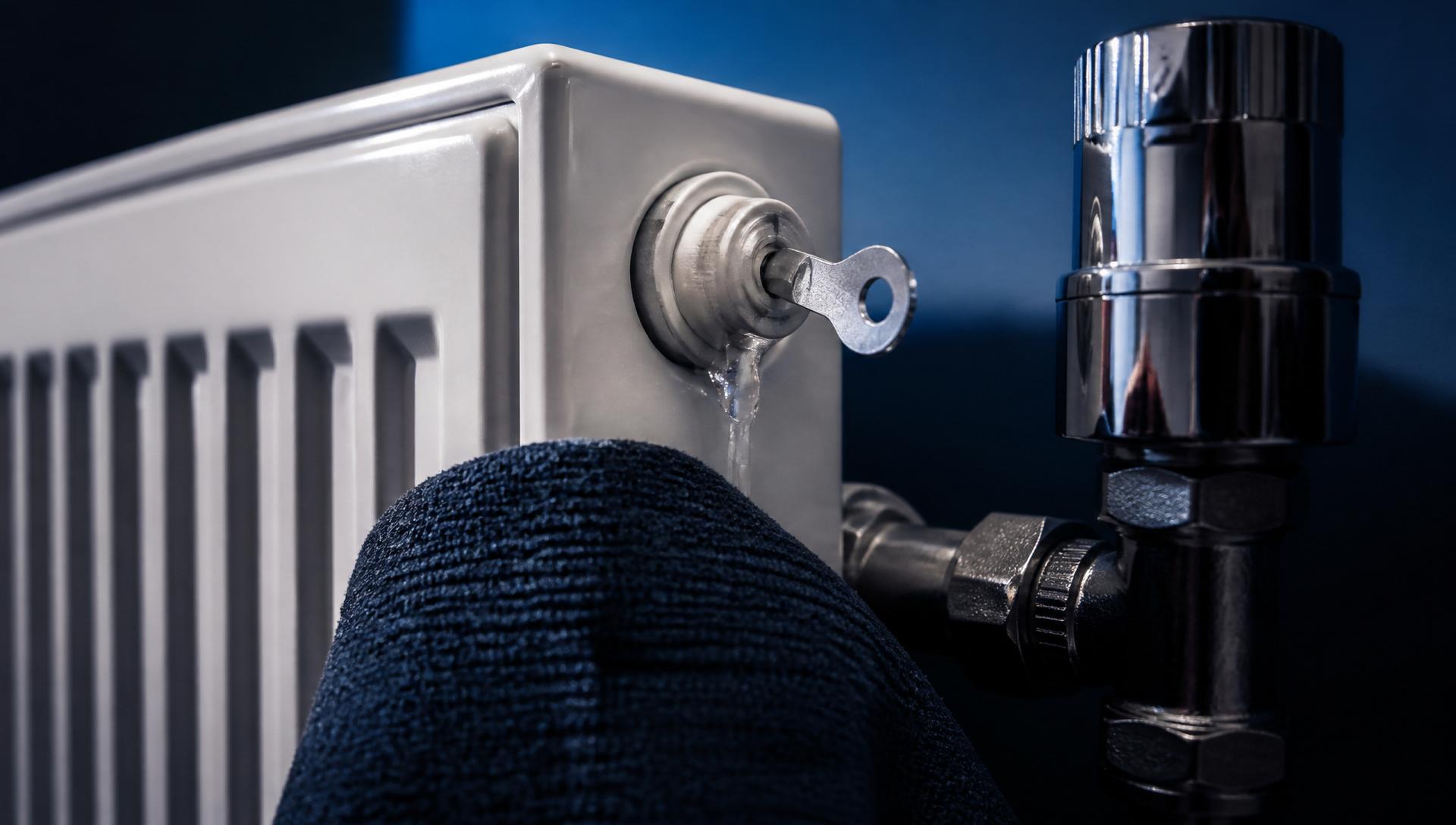
- Ignoring a slow drip because a towel absorbs it, the joists underneath won't.
A clear five-step system.
No guessing, no meter-running. Every job follows the same repeatable process, that's how the result stays consistent.
- 01
Diagnosis
Cold pattern (top, bottom, whole radiator), noise, leak location and system pressure all checked.
- 02
Immediate fixes
Bleeding, valve tightening, TRV swap or lockshield rebalancing done on the visit where suitable.
- 03
Larger repairs
Radiator removal, flush, valve replacement or radiator replacement, quoted, approved and completed to plan.
- 04
System-side work
Where sludge is systemic, we advise on inhibitor top-up, magnetic filter fitting or a full power-flush, honestly, with numbers.
- 05
Testing & guarantee
Refill, purge, balance and test. 12-month workmanship guarantee on any repair or install.
What you actually get.
Warmer rooms
Restored flow means every radiator hits its designed output.
Lower gas bills
A well-balanced system costs less to run for the same warmth.
Boiler protected
Cleaner water means less wear on pumps and heat exchangers.
Furniture and floors saved
Weeping valves caught early prevent expensive collateral damage.
Honest replace vs repair advice
We say when a radiator isn't worth repairing, and when a repair is fine.
One engineer, all rooms
One visit to sort every problem radiator in the house, not multiple tradespeople.
The detail that matters.
Understanding what a radiator is telling you is the difference between a proper fix and a temporary workaround.
Cold at the top
Almost always trapped air. Bleeding fixes the immediate problem; if it keeps returning, air is being drawn in, usually from a leaking joint, corroded auto air vent, or negative pressure zone in the pipework.
Cold at the bottom
Sludge. Magnetite (black iron oxide) settles at the bottom of the radiator and blocks flow. Bleeding doesn't fix it, the radiator needs flushing, and often the system needs treating with an inhibitor and a magnetic filter.
Valves and leaks
TRVs, lockshields and radiator tail joints all age. Weeping olives, dripping TRVs and failed lockshields are all straightforward same-visit repairs when caught early.
Whole-system sludging
When multiple radiators are cold at the bottom simultaneously, the system needs treating, inhibitor plus magnetic filter as a minimum, potentially a chemical or power-flush for heavily silted systems.
Questions we hear every week.
If you have a question that isn't answered here, ring John directly on 07442 536165.
Often booked together.
Cold rooms cost you money every day the boiler runs. Fix them.
Diagnosed properly, repaired properly, guaranteed for 12 months.